


For the very first time, the Israel Museum proudly presents a comprehensive exhibition exploring the remarkable oeuvre of Pesach Ir-Shay, a pioneering Hungarian-Jewish multidisciplinary artist and international graphic designer. Born as István Irsai in Budapest in 1896, his creative journey took him to Tel Aviv in the 1920s before he returned to Hungary, becoming a leading modernist designer prior to World War II. After surviving the Bergen-Belsen concentration camp, Ir-Shay and his family immigrated to Mandatory Palestine in 1945. Until his passing in 1968, he cemented his legacy as a founding father of modern graphic design in Israel, leaving behind an innovative, prolific, and deeply resonant body of work.
The Psychology of Advertising and Modern Typography
In the modern era, applied graphic design and advertising emerged as defining pillars of society and commerce. Raised in a cosmopolitan, progressive environment and heavily influenced by Freudian psychoanalysis, Ir-Shay believed that effective advertising must ignite emotion rather than merely display a product. As he eloquently stated, "People do not long for a stove, but for warmth."
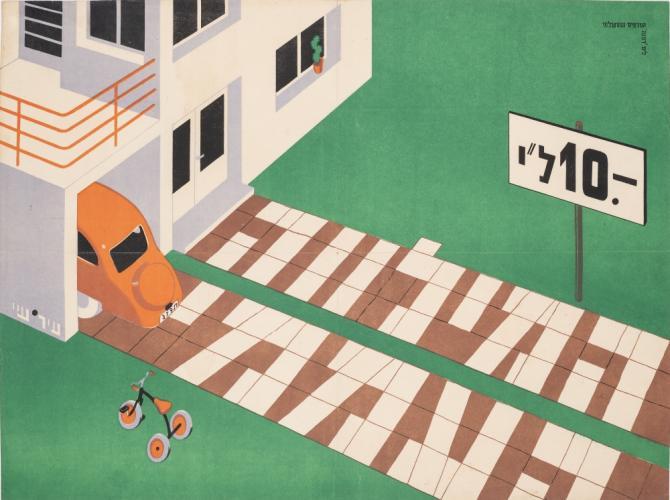
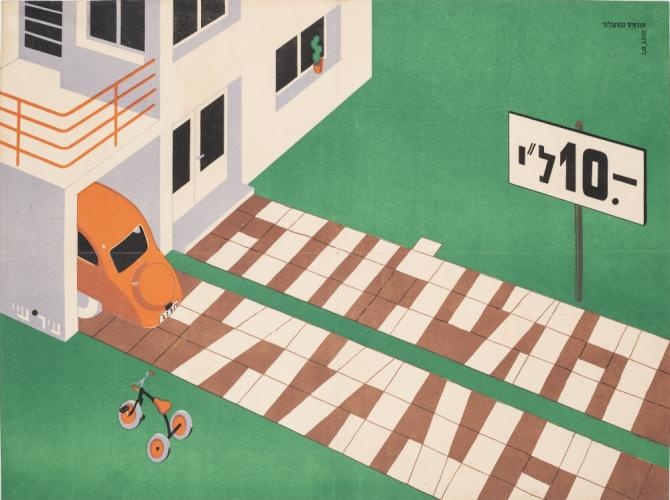
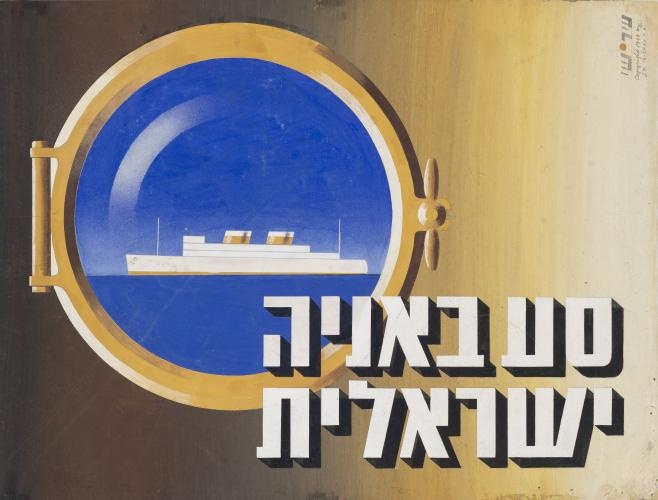
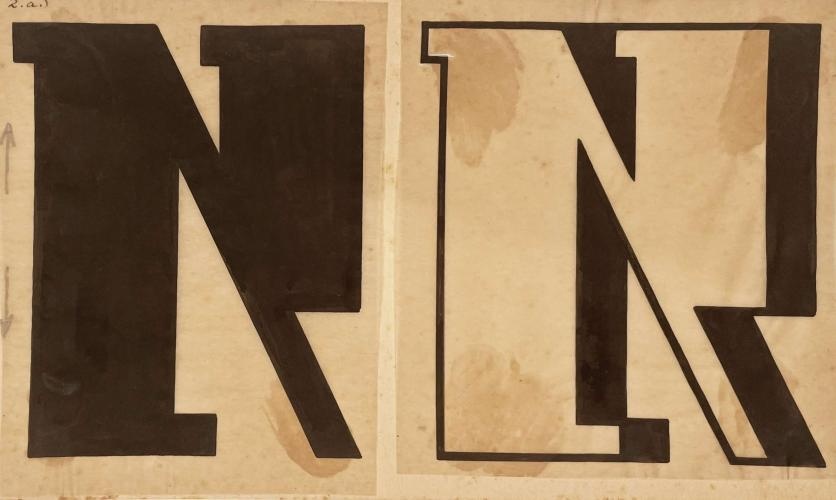
To capture this desire, he mastered the art of visual storytelling. By seamlessly blending movement, tension, and color with concise messaging, he guided the viewer's eye with precision. The written word, both in its meaning and typographic form, was central to his vision. Ir-Shay crafted clean, modernist Hebrew typefaces, stripping away decorative elements to create elegant and highly functional posters. This profound respect for text, in both Hebrew and foreign languages, beautifully echoed the centrality of the written word in Jewish tradition.
A Multidisciplinary Master of the 20th Century
The exhibition showcases a groundbreaking avant-garde artist whose talents knew no bounds, spanning graphic design, architecture, printing, stage design, and even music. Ir-Shay approached every creative challenge as an opportunity to build a bridge between the modernist spirit and classical Jewish tradition. Crucially, he utilized his design prowess not only for commercial success but also to advance meaningful social causes.
This captivating showcase was made possible by the generous donation of the artist's work to the Museum by renowned designer and collector David Tartakover. We also extend our deepest gratitude to the artist's daughter, Miryam Ir-Shay, for loaning a remarkable selection of pieces from his artistic estate.